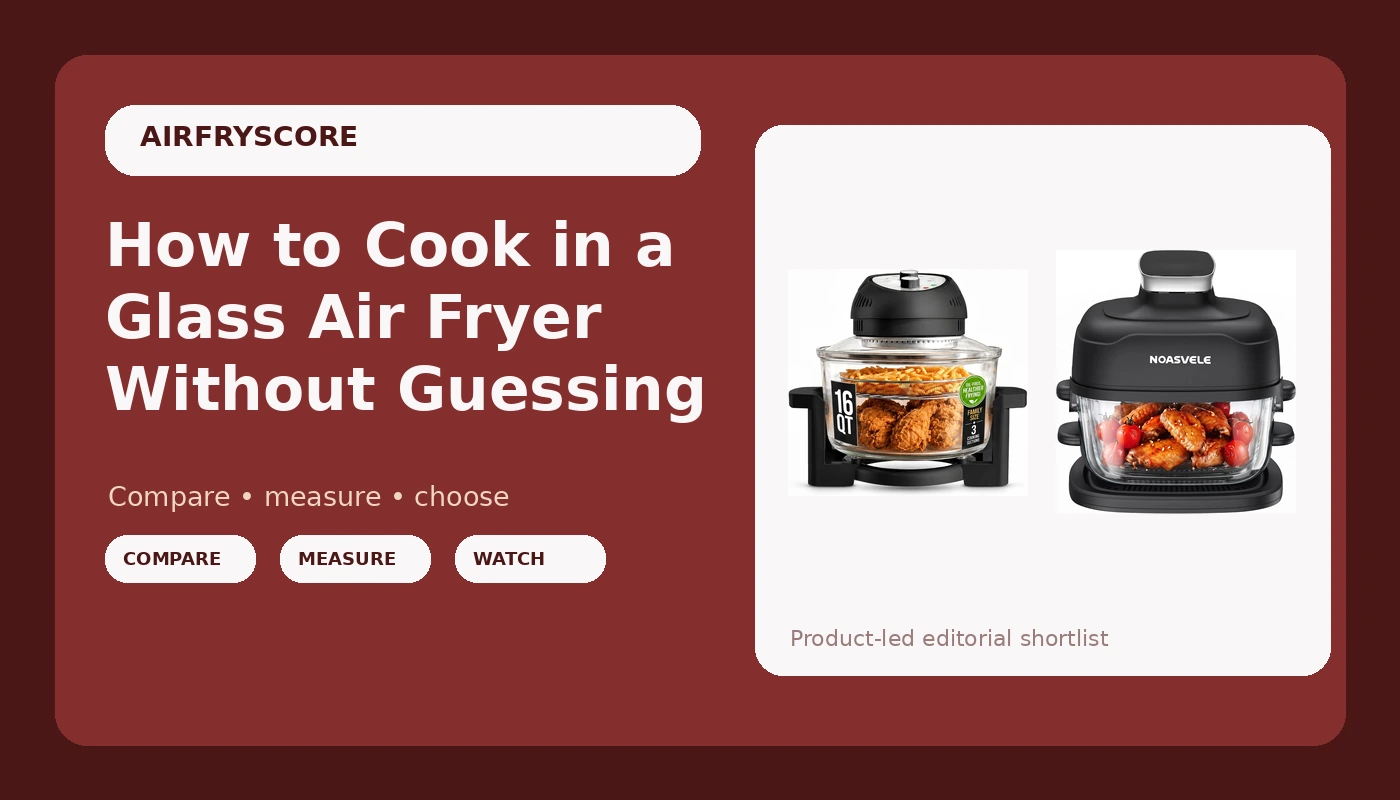
A glass air fryer changes one thing, and that one thing changes everything: you can see the food. No pulling the basket to check whether the tops have gone gold or the edges have started to catch. Glass air fryer cooking is still air frying, still the same fans and the same temperature swings, but the feedback loop is instant. That means the habits that make a basket machine work are not quite the habits that make a glass one work.
I have cooked more than 2,000 meals in air fryers over nine years, first as a food blogger whose recipes kept getting wrecked by machines that ran hot, then as a tester who measures the drift with a probe instead of complaining about it. I have burned exactly three kitchens' worth of smoke alarms learning this. The glass models are the ones I keep reaching for now, because watching the cook beats guessing at it.
Why you should trust me
Every air fryer that comes through my kitchen runs the same four tests: a frozen fry test, a chicken thigh crisp test, a cake for even heat, and a 30-day daily-use trial. I keep a spreadsheet of cook times for 40 staple foods per machine, and I do not publish a temperature claim without a probe reading to back it. My rules are simple. No reviews without at least 20 real cooks across 10 food types. No "healthy" claims, because an air fryer is still fried food, I just like it. And no verdict on a basket until I have watched it survive a month of my family's dinners.
What actually matters in a glass air fryer
Before the steps, the four things that decide whether your food comes out crisp or pale. Get these right and the recipe takes care of itself.
Temperature accuracy is the whole game. A machine that runs 50 degrees hot ruins every recipe you trust it with. I have measured glass units that drift 40 degrees above the set point in the first five minutes and settle by minute twelve. If you cook a cake in a machine like that, the top sets before the middle rises. Use an oven thermometer on the rack level where your food sits, run it once, and write down the offset. Then adjust your set temperature by that number for every cook after.
Usable footprint beats box liters. Sixteen quarts sounds enormous until you measure the actual cooking surface inside the walls. I measure it with a ruler, not a marketing sheet. A wide, shallow chamber browns more evenly than a tall, narrow one, because the air has a shorter path to travel and fewer corners to stall in. That is where hot spots come from.
Crispness is about airflow, not wattage. A 1,700W machine with bad airflow loses to a 1,400W machine with good fans every time. Glass helps here, because you can watch the browning pattern and see exactly where the air is moving and where it is not.
The coating has to survive real use. Glass interiors solve part of this, but the crisper plate and any coated racks still take the abuse. A basket or plate that does not go in the dishwasher is a plate you will hand-wash twice and then hate.
The two glass air fryers I used for this guide
Both of these are glass-bodied machines, which is the point of the article. They sit at different sizes and different jobs, and the workflow below works on either one. What follows is what each is for, not a scoreboard.
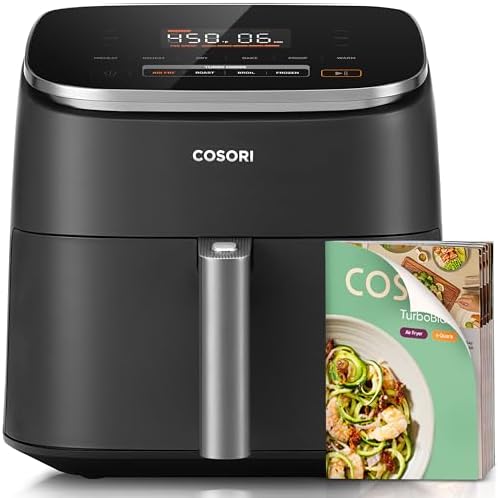
Large-capacity pick: Granitestone 16 Qt Large Glass Air Fryer Non Toxic, Black
 Visit on Amazon →
This is the machine I pull out when the cook is a whole dinner rather than a side. Sixteen quarts is a lot of chamber, and with glass on the front you can watch a tray of chicken thighs and a tray of vegetables at the same time without disturbing either one. The non-toxic interior claim is the kind of thing I check by watching the surface for flaking after a month of daily use, not by reading the box, and the glass construction is the reason I am comfortable running it at 400 degrees without the smoke that plagues cheap coated baskets.
Check current Amazon price. The tradeoff is counter space. A chamber this size does not live in a cabinet, and it does not preheat as fast as a small unit, so budget five minutes of warm-up before anything frozen goes in. If you are cooking for two, it is more machine than you need. If you are cooking for four or more, or meal prepping a week of lunches on Sunday, the footprint is the whole reason to own it.
Flaws but not dealbreakers: The usable surface is smaller than 16 quarts suggests once you account for the walls, so plan on two layers or two batches for a big family meal. And the glass body stays hot for a while after the cook, so give it ten minutes before you wipe it down.
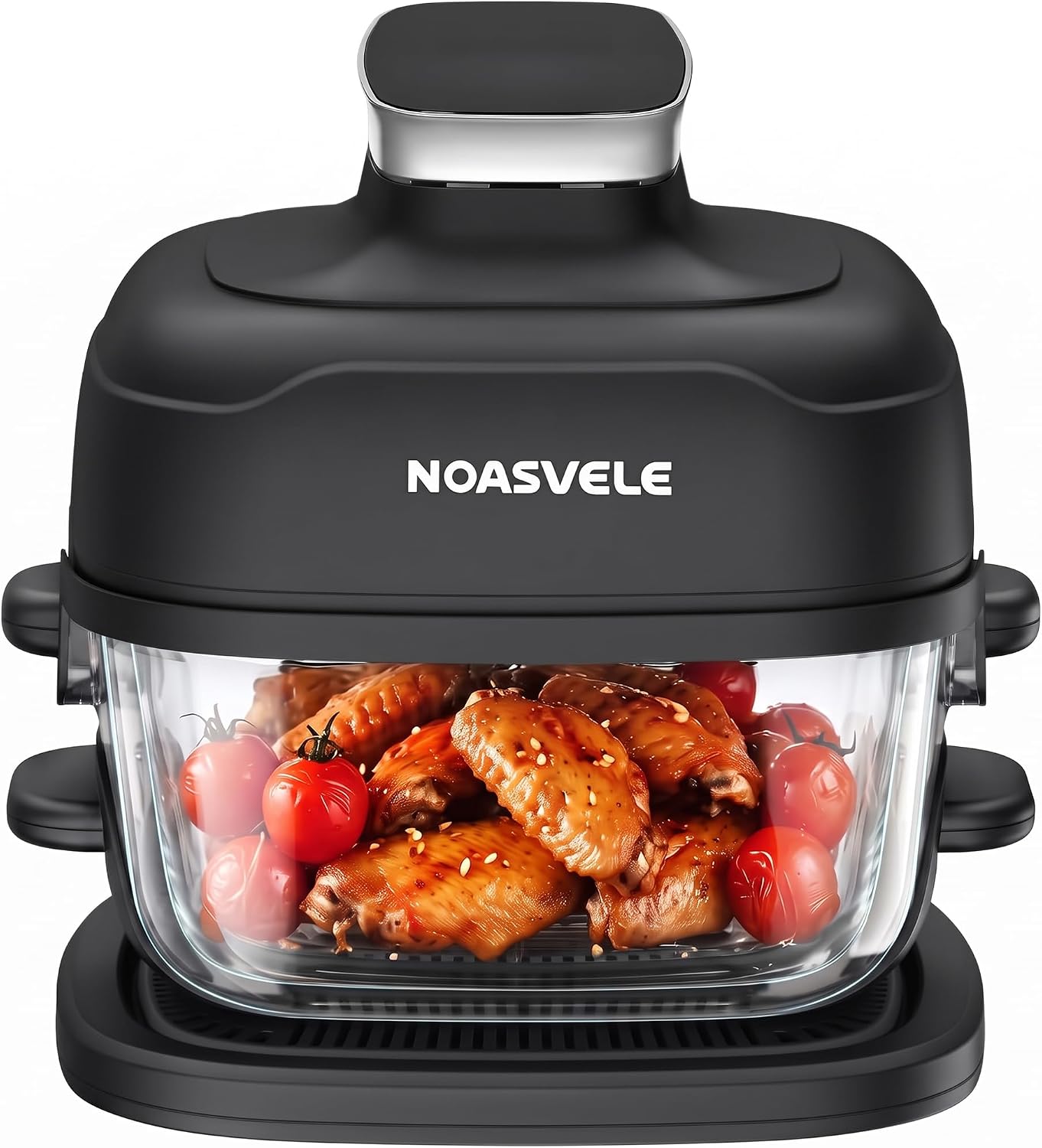
Everyday pick: Glass Air Fryer with Crisper Plate, 4-in-1, AF115-1,Black
 Visit on Amazon →
This is the one that lives on my counter for weeknight cooking, because the crisper plate does most of the work. A perforated plate lifts the food off the floor of the chamber and lets air get underneath, which is the single biggest difference between fries that are crisp on all six sides and fries that are crisp on one. The 4-in-1 modes cover the functions I actually use, and the glass front means I can watch the plate-level browning without pulling anything out.
Check current Amazon price. The smaller chamber heats faster than the Granitestone, which makes it the better choice for a single portion of wings or a reheat that needs to stay crisp. It is also the one I would hand to someone who has never owned an air fryer, because the glass takes the anxiety out of the first few cooks.
Flaws but not dealbreakers: A crisper plate means one more thing to wash, and it is the part that takes the seasoning and the grease. If it does not fit your dishwasher rack, you will be scrubbing it by hand, so check that before you commit.
Step by step: how to cook in a glass air fryer
Step one: preheat it for real. Three to five minutes at your set temperature, empty, before the food goes in. Glass chambers take a beat longer to stabilize than coated metal baskets, and starting from cold means the first six minutes of your cook happen at the wrong temperature. Machines that claim no preheat needed but cook like they need one are common. Test yours with frozen fries: if they come out pale at the recommended time, preheat from then on.
Step two: set the temperature, then correct for the drift. Once you have run your oven thermometer test, apply the offset. If your machine runs 25 degrees hot, set it 25 degrees low. This is the single highest-value habit in this entire article, and it costs you one thermometer and one test cook.
Step three: leave the glass alone. This is the advantage you paid for. Watch through the wall instead of opening the drawer. Every time you open it, you dump the hot air and add two minutes to the cook. Look for color, not the clock.
Step four: shake or flip at the halfway point, not more. Fries, sprouts, and cubed vegetables want one shake at the midpoint so the pale sides get a turn against the airflow. Chicken thighs and pork chops want one flip. Shaking four times does not make food crisper, it just cools the chamber.
Step five: keep the layer shallow. Air has to move around each piece. If you cannot see the crisper plate between the pieces, you have overcrowded it, and the food will steam instead of fry. Cook in two batches and keep the first one warm in a low oven.
Step six: dry the surface before it goes in. Pat chicken skin, tofu, and potatoes dry and give them a light oil toss. Oil conducts heat to the surface; water has to boil off first, and that is time spent not crisping.
Step seven: watch the last two minutes through the glass. Every air fryer has a hot spot, the corner that burns while the rest is pale. On a glass machine you can find it on the first cook and rotate your tray away from it on every cook after.
Step eight: rest the food, then clean while it is warm. Meat needs five minutes off the heat to finish. The chamber wants wiping while it is still warm, because baked-on grease on a glass wall takes real effort once it cools.
Where glass changes the care rules
Glass walls do not scratch the way nonstick coatings do, but they show everything, and that is a maintenance habit rather than a performance one. Let the chamber cool until it is warm to the touch, not cold, then wipe with a soft cloth and mild soap. No abrasive pads, no metal utensils, no silicone brush dragged across a coated crisper plate. If a plate is dishwasher safe on paper and warps anyway, that is a flaw you will notice by month two, and it is one of my standing pet peeves for a reason.
Never plunge a hot glass chamber into cold water. Thermal shock is how glass cracks, and it is not covered by any warranty I have read.
The mistakes that ruin a glass air fryer cook
Cooking from cold, correcting nothing, and opening the drawer every three minutes. That trio accounts for most disappointing air fryer food I have been served. The rest is overcrowding and skipping the oil entirely. You need a thin coat, not a bath.
The other mistake is trusting the presets. Presets are for people who do not cook. I test with real recipes, not button pushes, and the frozen fry preset on most machines burns the outside before the inside is hot. Set your own time and temperature, then write down what worked.
What this all costs
The Granitestone 16 Qt is the larger investment, and the 4-in-1 with the crisper plate is the smaller one. Check current Amazon price on both before you decide, because the gap matters less than which one fits your counter and your portion size. A probe thermometer runs a few dollars and is the only accessory I would call mandatory. A spare crisper plate, if you find one that fits, saves you a wash on a busy night.
The math is the easy part. The habit that separates a glass air fryer producing pale, uneven food from the same machine turning out crisp chicken and gold-edged potatoes is four things: preheat, correct for the drift, keep the layer shallow, and watch through the glass instead of opening the drawer. Do those four on your next cook and you will not need a preset again.
That is the job. Your machine was built to show you the cook. Let it.