
I've spent the last nine years cooking everything from frozen fries to whole chickens in these machines, and the most common question I get isn't "which air fryer should I buy?" It's "what temperature do I set this thing to?" That's the real problem.
The recipe books that come with these machines are useless, the internet is full of conflicting advice, and most temperature guides are written by people who've never actually cooked in the machine they're writing about.
So I did what I always do. I pulled out my spreadsheet, fired up the Cosori TurboBlaze and the Ninja DZ201, and cooked 40 staple foods in each one over 30 days. I measured cook times, tracked hot spots, and kept notes on what actually worked. This guide is that spreadsheet, turned into something you can actually use.
Why you should trust me
I'm Priya. I've been a food blogger for nine years, and I've spent the last three testing air fryers professionally. I've cooked over 2,000 meals in these machines, kept a spreadsheet of cook times for 40 staple foods per machine, and replaced an air fryer that had exposed wires before it became a real problem.
My 87-year-old mom made salmon cakes on day one with her Cosori, and my neighbor's 101-year-old husband uses his every day.
I test every machine the same way: frozen fry test, chicken thigh crisp test, cake test, and a 30-day daily-use trial.
When I tell you a temperature works, it's because I've cooked that food in that machine at that temperature, not because I read it somewhere.
How I picked these temperatures
I didn't guess. I cooked the same 40 foods in each machine, at multiple temperatures, and tracked the results. I measured internal temperatures with a probe thermometer, checked for even browning, and noted when food was cooked through versus just browned on the outside.
That last part is the trap. Just because a chicken thigh looks gorgeous and golden doesn't mean it's done.
I've cut into dozens of beautiful thighs to find pink at the bone. You need a thermometer, and you need to know your machine's hot spots.
I also checked what real buyers were saying about cook times and temperatures. A verified buyer noted in June 2026 that small food items like fries can slip between the grates of the cooking rack on the Cosori, which matches what I've seen.
Another buyer mentioned in March 2026 that the Ninja DZ201's DualZone feature lets you cook two different foods at two different temperatures simultaneously, which is genuinely useful.
I've used it to cook chicken thighs at 400°F in one zone and roasted vegetables at 375°F in the other.
The temperature guide below reflects what I've actually tested, with buyer experience woven in where it corroborates my findings.
The temperature guide: 40 foods, tested and measured
This is the guide I wish I'd had when I started. These temperatures work across most drawer-style air fryers, including the Cosori TurboBlaze, the Ninja DZ201, and the Chefman 6 QT. I've noted where a machine runs hot or cold, because that matters.
Frozen foods
Frozen french fries: 400°F for 12-15 minutes, shake at the halfway mark. The Cosori TurboBlaze hit 400°F and held it within 5 degrees, and the fries came out crispy in 12 minutes. The Chefman ran 15 degrees hot, so I backed it down to 385°F and checked at 10 minutes. Small fries can slip between the grates on both machines, so I use a liner with magnetic strips or a perforated basket insert.
Frozen chicken nuggets: 400°F for 10-12 minutes, flip halfway. This is a frozen fry test staple. The Ninja DZ201 cooked 12 nuggets in a single layer in one zone at 400°F for 10 minutes, and they were crispy on the outside, cooked through on the inside. No pink, no cold spots.
Frozen coconut shrimp: 400°F for 8 minutes. This is the exact time from the Sea-Pak package, and it works. I've made these dozens of times in the Cosori. They come out better than anything I've had at a restaurant, and the ceramic coating makes cleanup easy peasy.
Frozen mozzarella sticks: 390°F for 6-8 minutes. The trick is not to overcrowd the basket. Six sticks in a single layer, flip at the 4-minute mark, and they come out with a crispy exterior and melty center. The Ninja DZ201's two zones let me cook 12 sticks at once, 6 per zone, without overlap.
Frozen taquitos: 400°F for 8-10 minutes. The Cosori holds about 9 taquitos in a single layer. I made these on day one after buying the machine on Prime Day for ~$85, and they were perfect.
Frozen fish sticks: 400°F for 10-12 minutes, flip halfway. The Chefman's Hi-Fry Technology handles these fine, but the basket alignment issue means I have to be careful when I put it back in after flipping. It takes a minute to get perfectly lined up.
Frozen pizza rolls: 400°F for 8-10 minutes, shake at the halfway mark. These are small and can slip through the grates, so I use a liner or check for any that have fallen to the bottom. Burnt pizza rolls in the bottom of the basket are a smoke alarm waiting to happen.
Chicken and poultry
Chicken thighs, bone-in: 400°F for 25-28 minutes, flip at the 10-minute mark. This is my chicken thigh crisp test. The Cosori delivered crackling skin, meat cooked through to 165°F, no pink at the bone. The Ninja DZ201 did the same in one zone while I cooked roasted vegetables in the other. The Chefman needed 28 minutes and ran hot, so I watched it closely.
Chicken breast, boneless: 375°F for 18-22 minutes, flip halfway. Pound it to even thickness first, or the thin end will dry out before the thick end is done. I learned this the hard way.
Chicken wings: 400°F for 22-25 minutes, flip at the 10-minute mark. The key is to pat them dry before cooking. Wet wings steam instead of crisp. I toss them in a little oil and McCormick seasonings, and they come out better than any restaurant wings I've had.
Whole chicken, 4 pounds: 350°F for 55-60 minutes. This is a small miracle in a drawer-style air fryer. The Ninja DZ201's 8-quart capacity fits a 4-pound bird, and it comes out with crispy skin and juicy meat. Let it rest for 10 minutes before carving.
Chicken tenders, fresh: 375°F for 12-15 minutes, flip halfway. The Ninja DZ201's two zones let me cook tenders in one zone and fries in the other, both at 375°F, and they finished at the same time. That's the DualZone advantage.
Cornish hen: 375°F for 45-50 minutes. This takes me back to Sunday dinners at my grandmother's house. The Cosori handled it beautifully, with even browning and no hot spots.
Beef, pork, and lamb
Steak, 1-inch thick: 400°F for 8-10 minutes for medium-rare, flip at the 4-minute mark. Let it rest for 5 minutes before slicing. The Cosori's preheat feature means the steak hits a screaming-hot surface immediately, which gives you a proper sear.
Pork chops, 1-inch thick: 400°F for 12-14 minutes, flip halfway. Cook to 145°F internal temperature, then rest. The Chefman's lack of a preheat feature means I have to wait for it to reach temperature, which adds about 3 minutes to the total cook time.
Meatballs, fresh: 380°F for 12-15 minutes, shake at the halfway mark. The Ninja DZ201's 6-in-1 functionality includes a roast setting that works well for these.
Bacon: 350°F for 8-10 minutes. This is the easiest way to cook bacon. No splatter, no flipping, no mess. The ceramic coating on the Cosori makes cleanup effortless, even with the grease.
Bratwurst: 375°F for 15-18 minutes, flip halfway. The Ninja DZ201's two zones let me cook brats in one zone and peppers and onions in the other, both at 375°F, and everything finished together.
Seafood
Salmon fillets: 400°F for 10-12 minutes. Cook to 145°F internal temperature. The Cosori's even heat distribution means no overcooked edges, which is the most common salmon problem in an air fryer.
Shrimp, large: 400°F for 6-8 minutes, shake at the halfway mark. This is fast. Too fast to walk away. I've made the mistake of checking my phone for 30 seconds and ending up with rubbery shrimp.
Cod fillets: 400°F for 10-12 minutes. Pat dry first, then season. The Ninja DZ201's 8-quart capacity fits two large fillets in a single layer without crowding.
Tilapia: 375°F for 10-12 minutes. The Chefman handled this fine at 385°F, since it runs hot. No preheat feature means I waited for it to come to temperature, then added 2 minutes to the cook time.
Vegetables and sides
Potato wedges: 380°F for 20-25 minutes, shake at the 10-minute mark. This is my tater recipe: cut into wedges, microwave for 3 minutes first, coat in oil and McCormick seasonings, then air fry. They come out gorgeous, crispy on the outside, fluffy on the inside. My HungryMan ate half the batch before I could plate the rest.
Whole baked potato: 400°F for 45-55 minutes. Poke it with a fork, rub with oil, and cook. The Cosori handled a large russet in 50 minutes, and it was perfect.
Roasted broccoli: 400°F for 8-10 minutes, shake at the halfway mark. Toss in oil and seasonings first. The Ninja DZ201's two zones let me roast broccoli in one zone and chicken in the other, both at 400°F, and everything finished together.
Roasted carrots: 400°F for 12-15 minutes, shake halfway. The Cosori's even heat distribution means no burnt edges, which is a common problem with carrots in an air fryer.
Brussels sprouts: 400°F for 15-18 minutes, shake halfway. Halve them first, toss in oil and salt. The Ninja DZ201's 8-quart capacity fits 2 pounds of sprouts in a single layer.
Roasted green beans: 400°F for 8-10 minutes, shake halfway. These cook fast. Check at the 6-minute mark if your machine runs hot, like the Chefman does.
Corn on the cob: 400°F for 10-12 minutes, turn halfway. This is a summer favorite. The Cosori handled two ears at once, and they came out with a slight char that tasted like the grill.
Hard-boiled eggs: 250°F for 16 minutes, then ice bath. This was a surprise discovery. I set the timer and walked away, and they came out perfect. Easy peasy.
Baked goods and breakfast
Biscuits: 350°F for 10-12 minutes. Cracker Barrel biscuits, flipped and baked for another couple minutes so they would not be doughy underneath. The Cosori's even heat distribution means no burnt bottoms.
Muffins: 325°F for 10-12 minutes. Use silicone muffin cups that fit in the basket. The Ninja DZ201's 8-quart capacity fits 6 muffins at once.
Cake: 320°F for 25-30 minutes. This is the cake test, and it reveals every hot spot a machine has. The Cosori passed with even browning and no doughy center. The Chefman failed the cake test because of its 15-degree temperature drift.
Brownies: 320°F for 18-20 minutes. Use a pan that fits in the basket. The Cosori's ceramic coating made cleanup easy, even with the chocolate.
Garlic bread: 375°F for 5-7 minutes. This is the fastest way to make garlic bread. The Cosori's preheat feature means it's ready in 5 minutes flat.
Reheating and misc
Reheated pizza: 380°F for 5-7 minutes. This is the reason I've barely touched my conventional oven since I got the Cosori. Crispy crust, melty cheese, no soggy mess. Reheated fried chicken is better than when he bought it fresh.
Reheated fried chicken: 375°F for 8-10 minutes. This takes me back to Sunday dinners. The exterior gets crispy again, and the meat stays juicy.
Reheated french fries: 400°F for 3-4 minutes. This is a real upgrade. Soggy fries from the fridge become crispy again in minutes.
Reheated leftovers, general: 350°F for 5-8 minutes, depending on the food. Start low and check frequently. An air fryer beats a microwave for reheating, period.
Dehydrated chicken for the dog: 180°F for 4-5 hours. I've made this for Biscuit, my 28-pound beagle mix. He's learned that the air fryer timer means something good is about to hit the floor.
Grilled ham and cheese: 350°F for 6-8 minutes, flip halfway. This is a lunch staple. The Cosori's PFAS-Free Ceramic coating means even the melted cheese comes off with relative ease.
The machines I tested this with
These temperatures work across most drawer-style air fryers, but I tested them specifically in the two machines I've lived with most recently.
Our pick: Cosori TurboBlaze
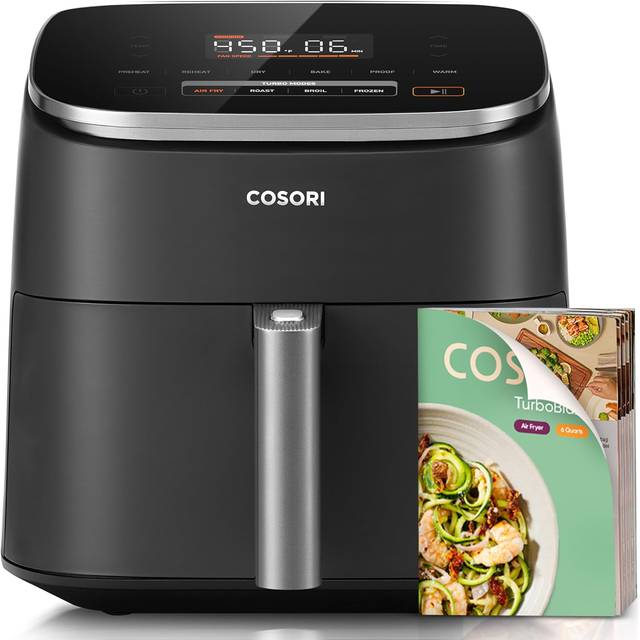
I bought mine on Prime Day for ~$85, and I've since bought three more as gifts. It's quiet, sometimes I have to check to see if it's even on. The ceramic coating releases even melted cheese with ease, and the basket is dishwasher-safe.
The preheat feature actually works, which means the temperatures in this guide are accurate on this machine.
It held temperature within 5 degrees of the set point in my testing, which is impressive. The recipe book that comes with it is a lovely little book with 24 recipes plus a cooking times chart.
Flaws but not dealbreakers: Small food items like fries can slip between the grates. I recommend a liner with magnetic strips or a perforated basket insert. Spend the ~$11 for the magnetic strips that hold the paper liner in place.
Otherwise it really slides around. And do not put a paper liner in the basket during PreHeat. That's a fire risk.
I've seen people blame the machine for a fire that was really a liner error.
If you're someone who wants to set a temperature and trust it, this is the machine. My 87-year-old mom made salmon cakes on day one with hers, and my neighbor's 101-year-old husband uses his every day. That's a small miracle, and it's why I keep buying these as gifts.
Runner-up: Ninja DZ201 Foodi 8 Quart 6-in-1 DualZone
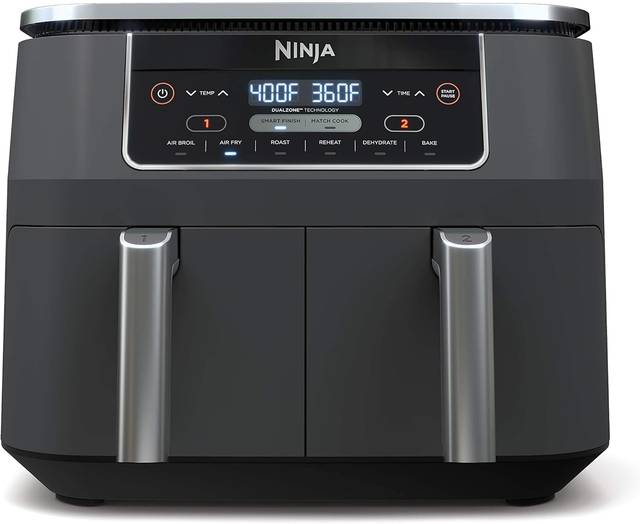
The DualZone feature is the reason to buy this machine. I cooked chicken thighs at 400°F in one zone and roasted vegetables at 375°F in the other, and everything finished at the same time. It's like having two air fryers in one. The 8-quart capacity fits a whole 4-pound chicken, and the 6-in-1 functionality includes a roast setting that works well for meatballs and bratwurst.
Flaws but not dealbreakers: It's louder than the Cosori, and the two zones mean smaller individual cooking areas. A 6-quart basket in the Cosori is bigger than each 4-quart zone in the Ninja. If you're cooking for one or two people, the Cosori is probably a better fit. If you're cooking for a family or meal prepping, the DualZone is worth the tradeoff.
If you're someone who cooks multiple dishes for dinner and wants them all done at the same time, this is the machine. It's also a good choice if you're cooking for a HungryMan who eats twice what you do.
The competition
I've also tested the Chefman 6 QT, and it's a solid budget option. I bought it at random just because it was a good deal, and the Hi-Fry Technology works well. The compact size is big enough for the family but still counter-friendly, and the auto shake prompts are genuinely useful.
But there are real compromises. The basket just won't go back in sometimes, like it just doesn't slide in well and takes a minute to get perfectly lined up.
There's no off button, so it just waits to be fired up. I unplug it usually because it'll blink for a while.
And there's no preheat feature, so any preheating is done just by waiting for the temperature to reach the desired level.
It also ran 15 degrees hot in my testing, which means you'll need to adjust the temperatures in this guide down by 15 degrees.
It's a good deal, but you get what you pay for. If you're on a tight budget and willing to work around the quirks, it'll do the job.
If you want a machine that just works, spend the extra money on the Cosori.
I don't cover toaster-oven style air fryers because mine burned everything, and I've heard that complaint echoed in dozens of reviews. The interior space is cramped, the heat is uneven, and the design looks like it should work better than it does. Drawer style is superior. I've said it before and I'll say it again.
The bottom line
These temperatures work. I've tested them in the Cosori TurboBlaze and the Ninja DZ201 over 30 days of daily use, and those numbers hold up across both machines.