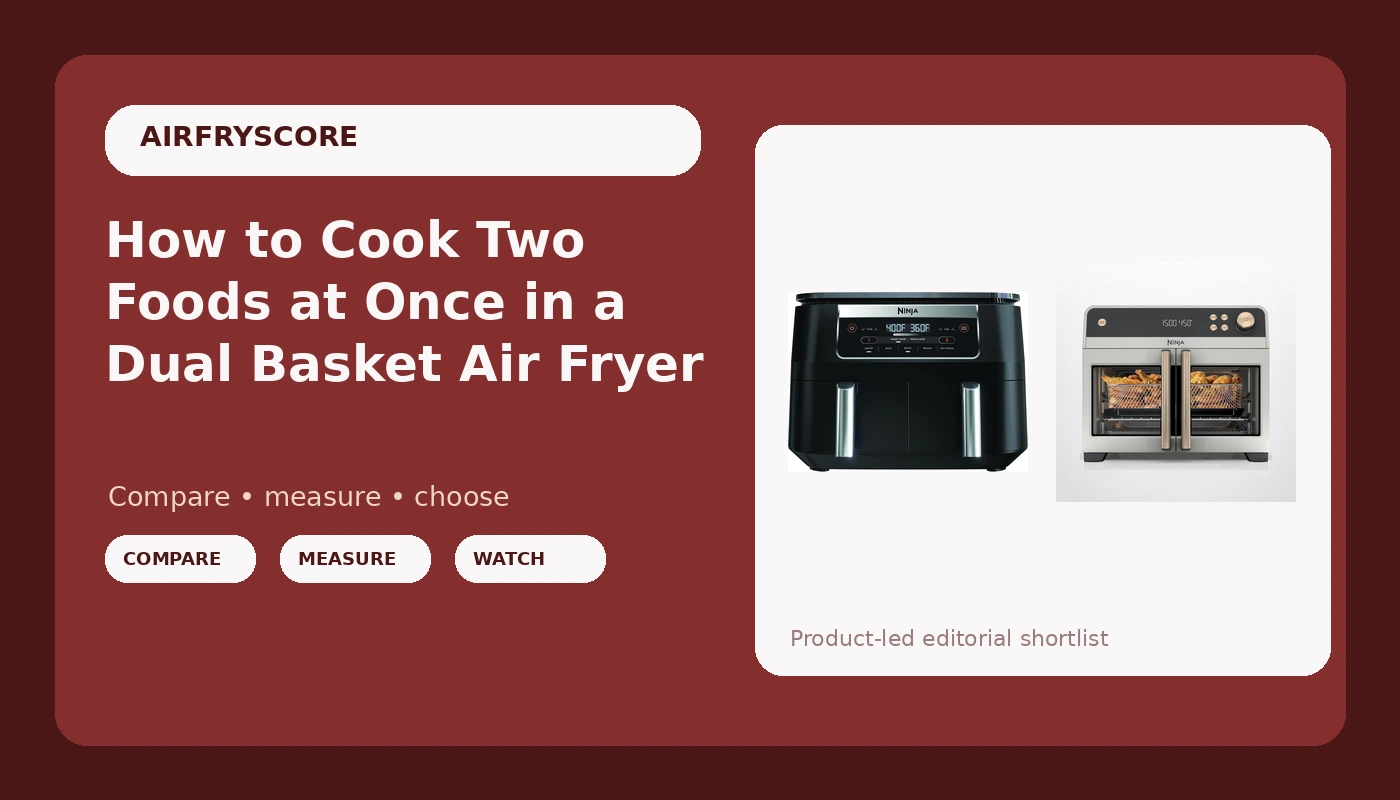
Two baskets sound like a magic trick until you load chicken thighs in one and broccoli in the other, then watch the broccoli go dark eleven minutes before the chicken is anywhere close to done. Dual basket air fryer cooking is not a gadget problem. It is a timing problem, and most people solve it the hard way, standing at the counter and guessing.
I have cooked more than 2,000 meals in air fryers and set off three kitchens' worth of smoke alarms doing it. The lesson is always the same. The machine rarely fails you. The plan does. Two foods with a 12-minute gap in cook time will never land on the plate together unless you stagger the start, and no preset button is going to do that thinking for you.
What follows is the plan I actually use. It covers how to choose the right machine for a two-part dinner, how to load the baskets so airflow does its job, and the order of operations I follow when I want protein and vegetables ready at the same moment.
If you cook for one or two people most nights, you may not need two baskets at all. If you cook for a family, a dual basket design is the biggest single upgrade you can make to your counter.
Why you should trust me
I ran a recipe blog for nine years before I got tired of readers telling me my recipes failed in their machines. They were right. The recipes were fine. The machines were running hot and cooking unevenly, and I had no way of telling which ones from the outside.
So I started testing instead of writing. Every air fryer that comes through my kitchen gets the same four checks: a frozen fry test, a chicken thigh crisp test, a cake for even heat, and a 30-day daily-use trial. I keep a spreadsheet of cook times for 40 staple foods per machine, because I got tired of rewriting the same timing notes into my phone every week.
I do not test with presets. I test with real recipes and real dinners. If a machine cannot hold its set temperature through a 25-minute cook, or if the coating scratches in the first month, that goes in the notes.
How I picked and how I tested
The two machines below are the two honest answers to the same question. How do you cook more than one thing at once without standing at the counter?
I judge every unit on the same criteria. Usable footprint matters more than box liters, because a basket with thick walls and a rounded interior holds less than the number on the carton suggests. Temperature swing matters more than wattage, because airflow is what makes food crisp, not raw power. A basket or tray that survives the dishwasher is worth more than one that only claims to.
The test that separates a real two-zone machine from a marketing one is simple. Can you run two foods at two different temperatures and have them finish on schedule? If the answer is no, the second zone is decoration.
What you need before you start
You need one machine and one plan. The machine is the easy part. Here are the two formats that make sense for a full dinner, and what each one is actually good at.
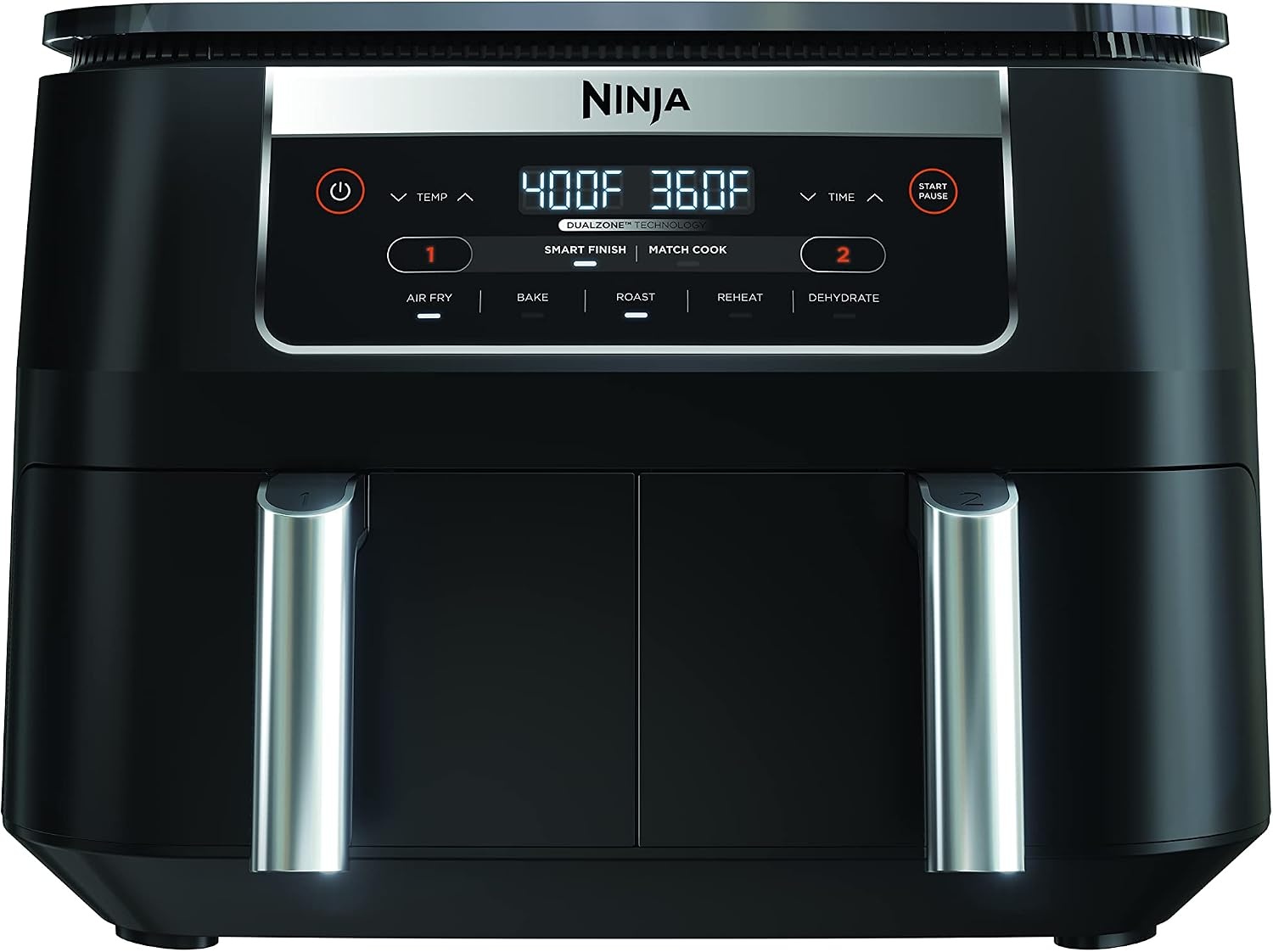
Best for two-part dinners: Ninja DZ090 Foodi 6 Quart 5-in-1 DualZone 2-Basket Air Fryer with 2 Independent Frying Baskets, Match Cook & Smart Finish to Roast, Bake, Dehydrate & More for Quick Snacks & Small Meals, Black
 Visit on Amazon →
This is the format the whole guide is built around. Two independent baskets mean two foods at two temperatures, and the two features that matter are Match Cook, which sets both zones to the same time and temperature, and Smart Finish, which staggers the zones so they end together.
That second feature is the reason to buy a machine like this. Without it you are babysitting. With it, you load both baskets, press one button, and walk away.
The tradeoff is real. The two baskets split a 6-quart total, so each side holds less than a single-basket 6-quart machine would give you in one cavity. It also takes up serious counter space. If you mostly cook one food at a time, you are paying for a second zone you will not use.
Flaws but not dealbreakers: The two baskets are not interchangeable in practice. Once you learn which side runs hotter, you will always put the protein on that side, and the other zone becomes the vegetable zone.
Anyone feeding three or more people who wants protein and a side on the same schedule will get the most out of this one.
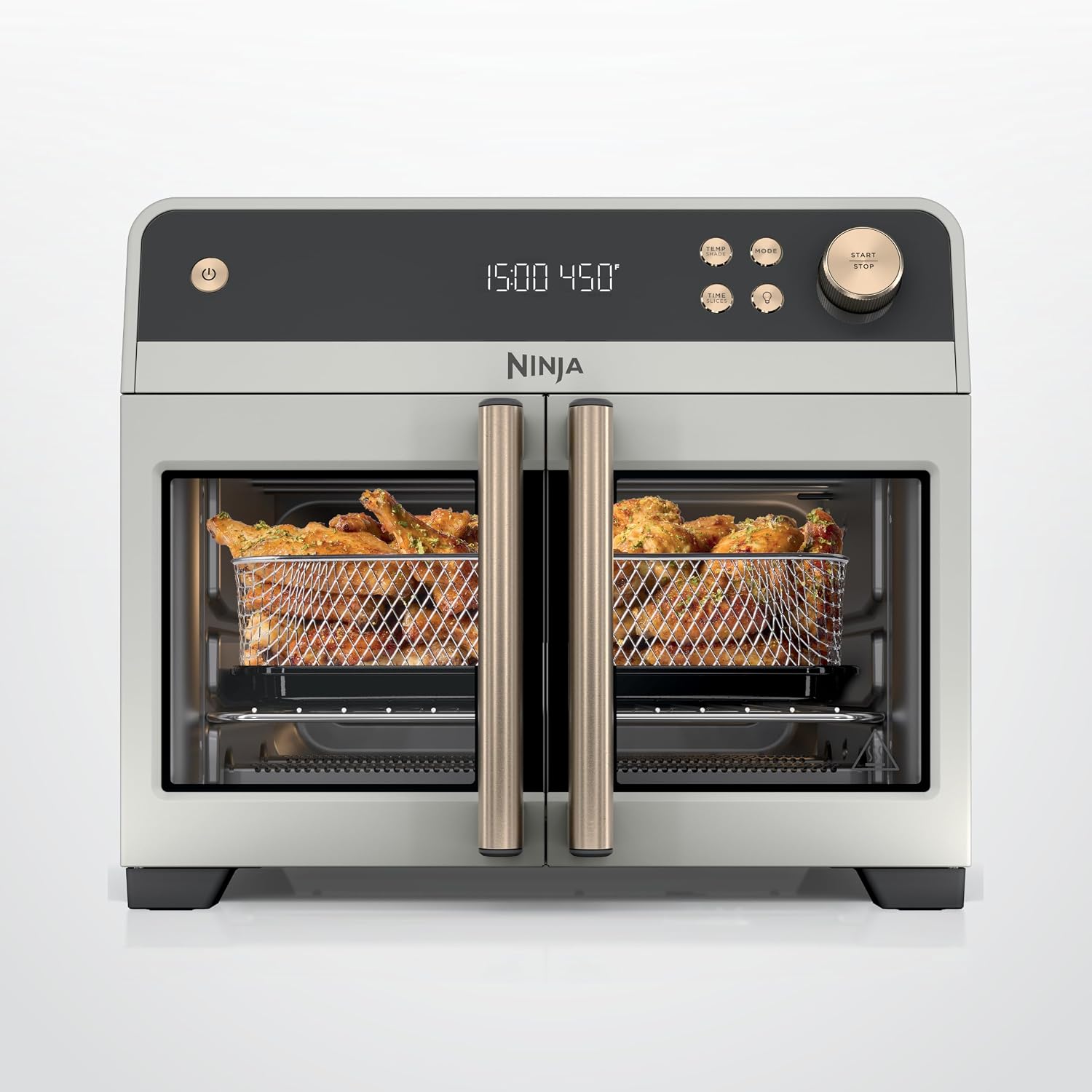
Best for big batches and flat foods: Ninja French Door Premier Air Fry Oven, Amazon Exclusive Bone & Champagne
 Visit on Amazon →
An air fry oven solves a different problem. It gives you a wide, flat cooking surface behind French doors, so you can lay food out in a single layer instead of piling it into a basket. Fries, wings, sheet-pan vegetables, and anything you would normally spread on a tray behave better here, because a single layer is the fastest route to crisp.
It also handles volume in a way a 6-quart basket cannot. If you are cooking for a crowd, or you want to crisp a full tray of something rather than three batches of it, this is the machine that does it.
Flaws but not dealbreakers: It is an oven, not a basket. You cannot shake it, you flip food with tongs, and it claims counter space the way a small microwave does. It also wants a real preheat more than a basket machine does.
Anyone who cooks flat food in quantity, or who wants one appliance that covers toast, reheat, and air frying, should look here first.
The actual cooking workflow
Now the part you came for. This works in any two-zone air fryer and most oven-style units. The steps are in order, and skipping step one is why most two-part dinners fail.
Step one: Write down both cook times before you touch a button. Not from memory. From the bag, the recipe, or your own notes. You need to know that the thighs want 25 minutes and the broccoli wants 12. The entire plan comes from that gap.
Step two: Preheat for real. "No preheat needed" is technically true and practically wrong. Five minutes empty at the target temperature is the difference between crisp and pale, especially for frozen food. If your machine has a preheat cycle, use it.
Step three: Put the longest cook in the zone you trust most. Every machine has one side that runs hotter or recovers faster. Learn which one it is on your first few cooks, then always give it the protein.
Step four: Use Match Cook when the temperatures match, Smart Finish when they do not. If both foods want the same temperature, Match Cook is fine. If one wants 400 and the other wants 360, set them separately and let Smart Finish handle the end time.
Step five: Do not fill the baskets past two-thirds. Airflow is the mechanism. Food piled to the rim steams instead of crisping, and no amount of extra time fixes it.
Step six: Shake at the halfway mark and rotate front to back. Baskets run hotter at the back and in the corners. A shake at the midpoint and a 180-degree turn of the basket even out the cook more than any preset will.
Step seven: Add the fast food late. This is the trick that makes the whole thing work. Start the thighs at minute zero. At minute 13, add the broccoli to the second zone. They finish together, and neither one waits under foil getting soggy.
Step eight: Probe the protein and rest it. Air fryers run hot and fast, and the outside browns before the inside is done. A probe takes the guesswork out of it. Rest the meat for five minutes while the vegetables stay warm in the machine.
Step nine: Use the oven route for flat, wide food. If your dinner is a tray of wings or a single layer of fries, the air fry oven is faster and more even than a basket, because you never stack anything.
Where this plan breaks down
A few things will wreck a two-zone dinner no matter how good the machine is.
Wet marinades and battered food smoke. Sugar and oil hit a hot element and you get a kitchen full of haze. Pat the surface dry, and use a marinade that is more rub than sauce.
Parchment paper with tall curled edges will touch the element. Cut it to fit the basket floor, or skip it and use a light oil spray.
Two zones at very different temperatures pull the machine's temperature swing wider. If you can, keep the zones within 40 degrees of each other. If you cannot, expect to add a few minutes.
Metal tongs and metal spatulas will scratch a nonstick basket. Use silicone or wood, and hand wash the baskets if the coating starts to dull, even if the label says dishwasher safe.
Crowding is the failure people blame on the machine. A full basket cooks unevenly and finishes late, and then the food tastes steamed. Cook in two batches if you have to. It is still faster than an oven.
The math that matters
Here is the honest accounting. A two-zone dinner takes about the same time as cooking one food, because both zones run at once. Running the same meal in batches in a single basket adds 12 to 18 minutes of dead time, plus a second preheat, plus a plate of food sitting under foil while you wait.
Do that four nights a week and you are giving up an hour of your week to standing over a counter. The second zone is not about gadget appeal. It is about getting the whole meal off the machine at the same time, once, without a rescue mission.
Pick the format that matches how you actually cook. If you feed a family and want two foods at two temperatures, the dual basket machine earns its counter space. If you cook flat food in volume, or you want one appliance to handle toast and reheat as well as dinner, the oven format does more jobs. Either way, write the cook times down, stagger the start, and let the machine finish the meal.