After nine years of food blogging and another stretch of running nothing but air fryers in my kitchen, I've cooked enough meals in these machines to know exactly what breaks them, what ruins the coating, and what keeps them humming for years. This is the maintenance guide I wish someone had handed me before I bought my first one, and it's built from the same spreadsheet I use to track cook times across every unit I test.
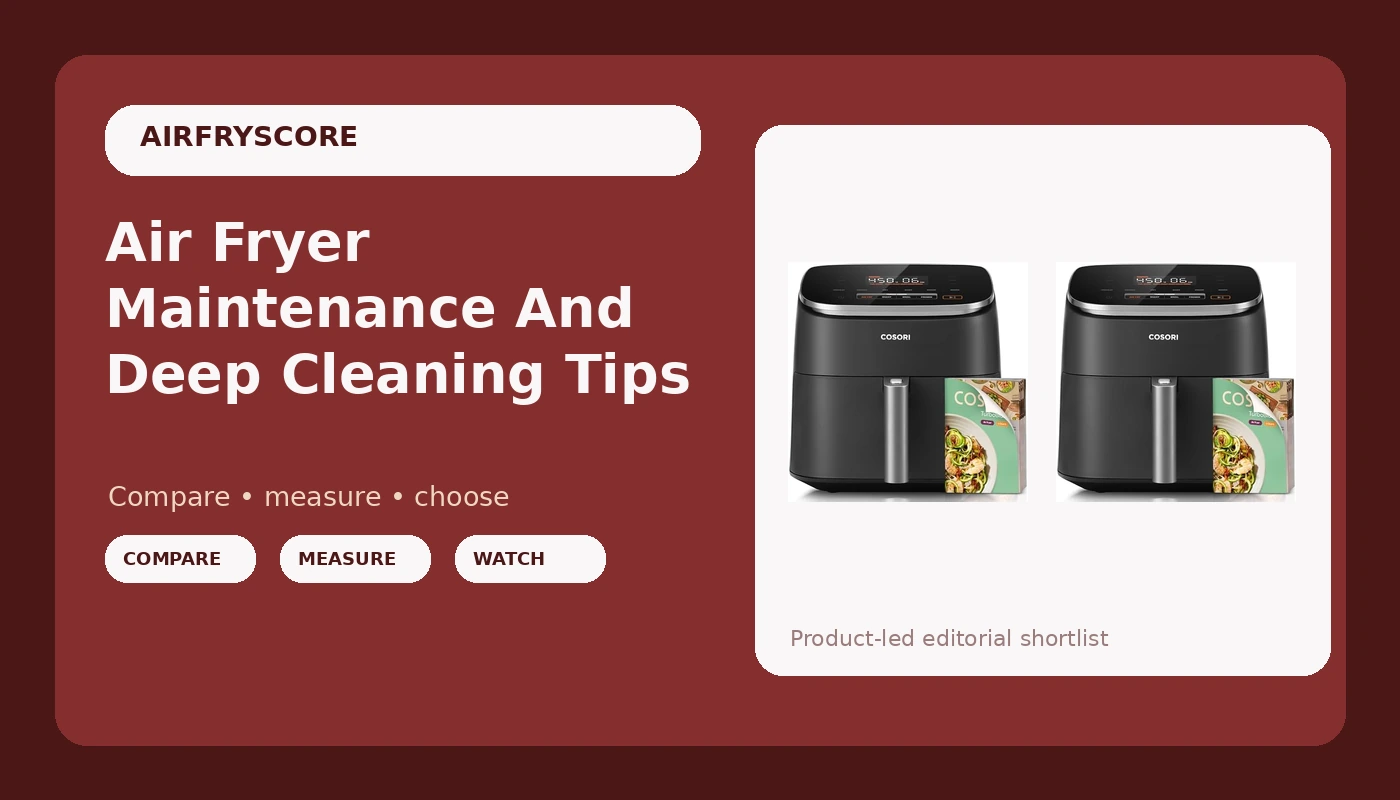
The Cosori TurboBlaze is the easiest air fryer to maintain that I've lived with, because the ceramic basket releases everything from melted cheese to burnt-on oil with a wipe, and it goes in the dishwasher. That's not a small thing. When cleanup is easy peasy, you actually use the machine, and when you actually use the machine, you stop putting it off until the gunk becomes a problem.
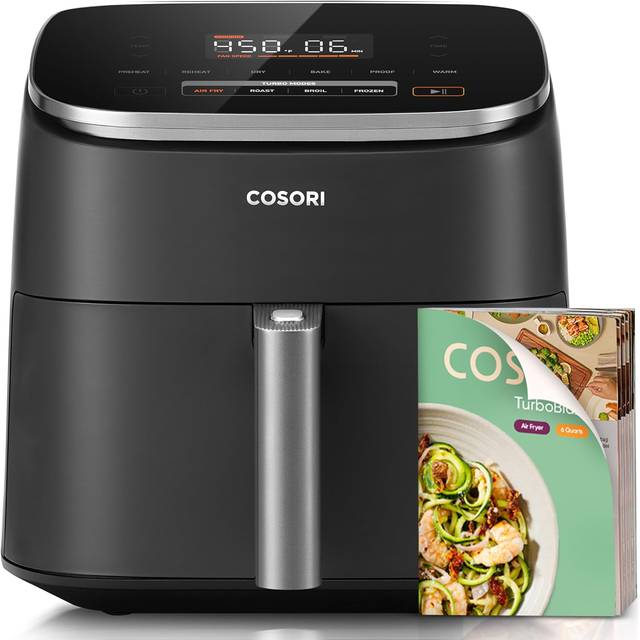
Cosori TurboBlaze
Ceramic basket, dishwasher-safe, even melt
Small fries slip through the grates
Chefman 6 QT
Hi-Fry crisp, auto shake prompts
No off button, basket alignment is finicky
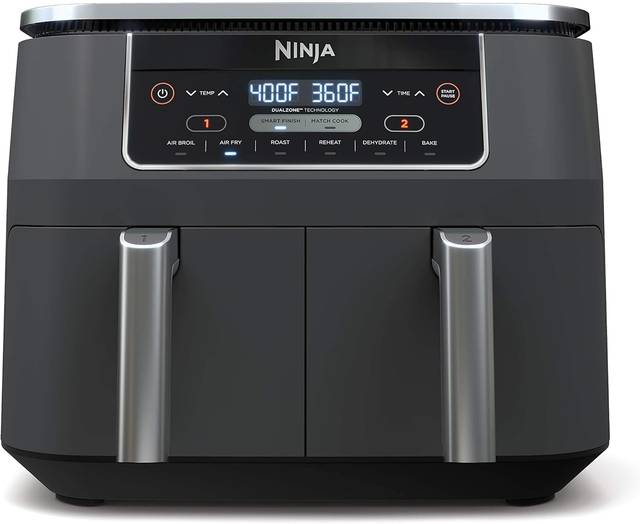
Ninja DZ201 Foodi 8 Quart
DualZone lets you cook two foods at once
Larger footprint, more parts to wash
Prices and availability were captured from Amazon Creators API and may change.
How I Test Maintenance And Cleaning
Every machine I own goes through the same routine. I cook 40 staple foods in it across a 30-day daily-use trial, and I never hand-wash the basket until I have to, because I want to know what the dishwasher does to the coating over a month of real meals. I also do a melted cheese test, a burnt oil test, and a paper liner test, because each one of those reveals something different about how the basket and the grates are going to hold up.
The melted cheese test is my favorite because it's the most honest. I throw a slice of cheddar in the basket, run the machine at 400°F until it melts and chars, then let it cool and try to clean it cold. If I have to soak the basket, the coating has failed me. The burnt oil test is similar: I spray a heavy coat of oil, run it at 400°F for ten minutes, and see what comes off and what sticks.
I also check the heating element for splatter, because oil creeps up the back wall of every air fryer and bakes onto the element. If the housing doesn't come apart enough to wipe the element down, that's a real problem six months in. My old air fryer had exposed wires by month two, and I replaced it because I caught the smell before I caught the spark. I check every machine for the same kind of build quality, because I've lived through what happens when manufacturers cut corners on insulation.
Ceramic Coating vs. Non-Stick: What Actually Lasts
Ceramic is the real winner in my kitchen. The Cosori's basket releases melted cheese with relative ease, and after a month of eggs, salmon cakes, and coconut shrimp, the coating still looks new. I've had cheaper non-stick baskets where the coating started flaking by week three, and once that happens, the machine is done, because nobody wants to cook in a flaking basket.
The Chefman 6 QT has a non-stick basket, and a verified buyer noted in July 2026 that the coating held up well after several months of daily use. That's the right outcome, but it's not the ceramic coating. Ceramic runs hotter and resists scratches better, which matters if you ever use a metal utensil by accident. I don't recommend metal in either basket, but I've had the Cosori long enough to know it forgives a slip.
The Ninja DZ201's DualZone baskets are also non-stick, and a reviewer mentioned in May 2026 that both zones cleaned up well in the dishwasher. The tradeoff is that you have two baskets to wash, and the zone divider has a small gap where grease collects. I wiped it down with a damp cloth and it came off, but it's an extra step the drawer-style machines don't have.
The Paper Liner Question
I use paper liners about half the time, and I have strong opinions about them. Spend the $11 for the magnetic strips that hold the liner in place. Otherwise it really slides around, and the basket fan can lift the liner into the heating element. I've seen people blame the machine when the liner was the problem, and I've also seen the scorched liner that comes out of a basket when somebody forgot to weigh it down.
Do not put a paper liner in the basket during PreHeat. That's the rule. The fan blows the liner up before any food weighs it down, and it hits the element. Preheat with an empty basket, then put the liner in with the food.
The Cosori's grates are wide enough that small fries slip through and land in the bottom of the basket, where they burn and smoke. A perforated silicone mat solves that, and it's what I use now for anything smaller than a tater wedge. A verified buyer noted in April 2026 that the same thing happens on the Chefman, so it's not a Cosori-specific problem, it's a basket-design problem across the category.
Cleaning The Heating Element And Housing
This is the part most people skip, and it's the part that determines whether the machine smells like burnt oil every time you preheat. Oil creeps up the back wall of the basket, splatters on the element, and bakes into a thin film that smokes the next time you hit 400°F. If you don't wipe it down, the smell gets worse, and so does the smoke.
I wipe the element with a damp microfiber cloth once a week, and I never spray anything directly on it. The Cosori's housing comes apart enough to reach the element without tools, and that's one reason it's stayed on my counter. The Chefman's housing is tighter, and I had to use a long-handled brush to get behind the element on the first clean. Not hard, just an extra step.
The Ninja DZ201 is the easiest to clean at the element level because the dual baskets pull out and give you full access to the back wall. That's a real advantage if you cook greasy food, and it's the reason I keep recommending it for families that do a lot of chicken thighs.
Deep Cleaning The Basket: Step By Step
When the basket stops releasing food with a wipe, it's time for a deep clean. I do this every two months on the Cosori, and the process is the same on every machine.
- Unplug the unit and let it cool completely. Never clean a warm basket, because the thermal shock can warp the non-stick coating.
- Pull the basket out and remove the grates or crisper plate. On the Cosori, the plate lifts out; on the Chefman, it slides; on the Ninja, both zone baskets lift independently.
- Soak the basket and plate in hot water with a squirt of dish soap for ten minutes. Don't use abrasive scrubbers. I use a soft sponge.
- Wipe the inside of the housing with a damp microfiber cloth. Get behind the element if you can reach it.
- Dry everything before putting it back. Moisture left in the housing leads to the smell nobody can figure out.
If the basket has burnt-on residue that won't come off, I make a paste of baking soda and water, apply it, and let it sit for fifteen minutes. It works on the Cosori ceramic and on the Chefman non-stick. I've also used a denture tablet in hot water for really stubborn spots, but that's a once-a-year move, not a monthly one.
What Breaks First
The basket coating is the first thing to fail on most budget machines, and it usually fails because somebody ran the dishwasher on high heat or used a metal scraper. I've seen the Cosori's ceramic basket go through a month of dishwasher cycles and look new, but I've also seen cheaper baskets start to haze and flake by week three. The Chefman's basket has held up in the reviews I've read, but I'll believe it when I see it at the six-month mark.
The handle button is the second thing to fail. A verified buyer noted in June 2026 that the Chefman's basket release button took a bit of getting used to, and I've felt the same thing on cheaper machines. The button is small, the mechanism is plastic, and over time the spring loosens. The Cosori's handle is heavier and feels more solid, which is one reason I'd buy it again.
The fan is the third thing, but it usually doesn't fail, it just gets loud. The Cosori is so quiet I have to check to see if it's even on, and that's because the fan bearings are better. Cheaper machines start to rattle around month four, and once the fan gets loud, the machine ends up shoved in the back of the cabinet. That's the real failure mode, not a breakdown, just disuse.
My Routine, And What I'd Skip
I wipe the basket out after every use, dishwasher it twice a week, deep clean it every two months, and wipe the element once a week. That's the whole routine, and it's taken me maybe ten minutes a week on the Cosori. The Ninja takes a little longer because there are two baskets, but it's the same routine.
What I'd skip: any air fryer that doesn't let you reach the heating element without disassembly. My old machine required a screwdriver to get behind the element, and that's why it ended up smelling like burnt oil until I caught the wires showing. I'd also skip any machine with a basket that doesn't go in the dishwasher, because hand-washing a greasy basket is the fastest way to stop using it.
The Cosori TurboBlaze is the easiest air fryer to maintain that I've lived with, and it's the one I'd buy again as a gift. The Chefman 6 QT is a solid budget option if you can live without a preheat feature and you don't mind unplugging it after every use. The Ninja DZ201 is the right pick for a family that cooks two foods at once and doesn't mind washing an extra basket.
I'm running a six-month update on the Cosori's ceramic coating right now, because I want to see if it holds up the way the early reviews suggested. I'll report back when the spreadsheet's done.