Most people blame the machine when frozen fries come out pale and floppy. They crank the temperature to 400, add five more minutes, and end up with burnt edges and cold centers. Crispy air fryer results are a workflow problem before they are a hardware problem, and the fix costs nothing but attention.
I have cooked more meals in air fryers than I can count, and the pattern never changes. The machines that turn out the best food are not always the most expensive ones. They are the ones where the cook understands three things: how air moves around the food, how accurate the thermostat really is, and how much usable cooking surface the basket offers once the walls take their cut.
This is the workflow I use for crisp food every night of the week, plus the cleanup routine that keeps a machine alive past the first year.
Why you should trust me
I have been writing about food for nine years, and I moved into air fryer testing full time after a run of machines that ran hot ruined recipes I had already published. Since then I have run every unit through the same gauntlet: a frozen fry test, a chicken thigh crisp test, a small cake for even heat, and a month of daily cooking. I keep a spreadsheet of cook times for 40 staple foods per machine, because memory is a liar and thermostats drift.
My bias is simple. Temperature accuracy is the whole game. A machine that runs 50 degrees hot will ruin every recipe you trust it with, no matter how many presets it advertises on the box. And a basket that does not go in the dishwasher is a basket you will hand wash twice and then start to resent.
What actually makes food crispy
Crispness is about airflow, not wattage. A 1,700 watt machine with bad airflow loses to a 1,400 watt machine with good fans, and I have watched that happen on the same batch of frozen fries.
Here is the mechanism. Hot air moving fast across a wet surface pulls moisture off it. Once the surface dries, the Maillard reaction and dehydration take over and you get a crust. Anything that slows that air down, whether it is a crowded basket, a wet coating, or a lid of foil, gives you steamed food instead. That is the entire science, and every step below is in service of it.
Two more ideas worth internalizing. The hot spot is the corner that burns while the rest of the basket stays pale, and every cheap machine has one. The temperature swing is how far the machine drifts from the set temperature during a cook, and it is the number nobody puts on the box.
How I picked and how I tested
The products in this guide are not a ranking of every air fryer on the market. They are the two things I would actually put on a counter and in a cabinet if I were setting someone up from scratch: a machine that holds temperature and has a real cooking surface, and a cleaner that lifts baked-on grease off a nonstick basket without stripping it.
For machines, I look at four things. Does it hold temperature within about 10 degrees across a cook? Is the usable footprint actually usable, or is the box literage marketing? Does the coating survive a month of real use with real utensils? And would I cook my family's dinner in it every night without dreading the cleanup? For cleaners, the bar is narrower: no harsh fumes in a small kitchen, safe on nonstick, and strong enough to break down grease that has already baked on.
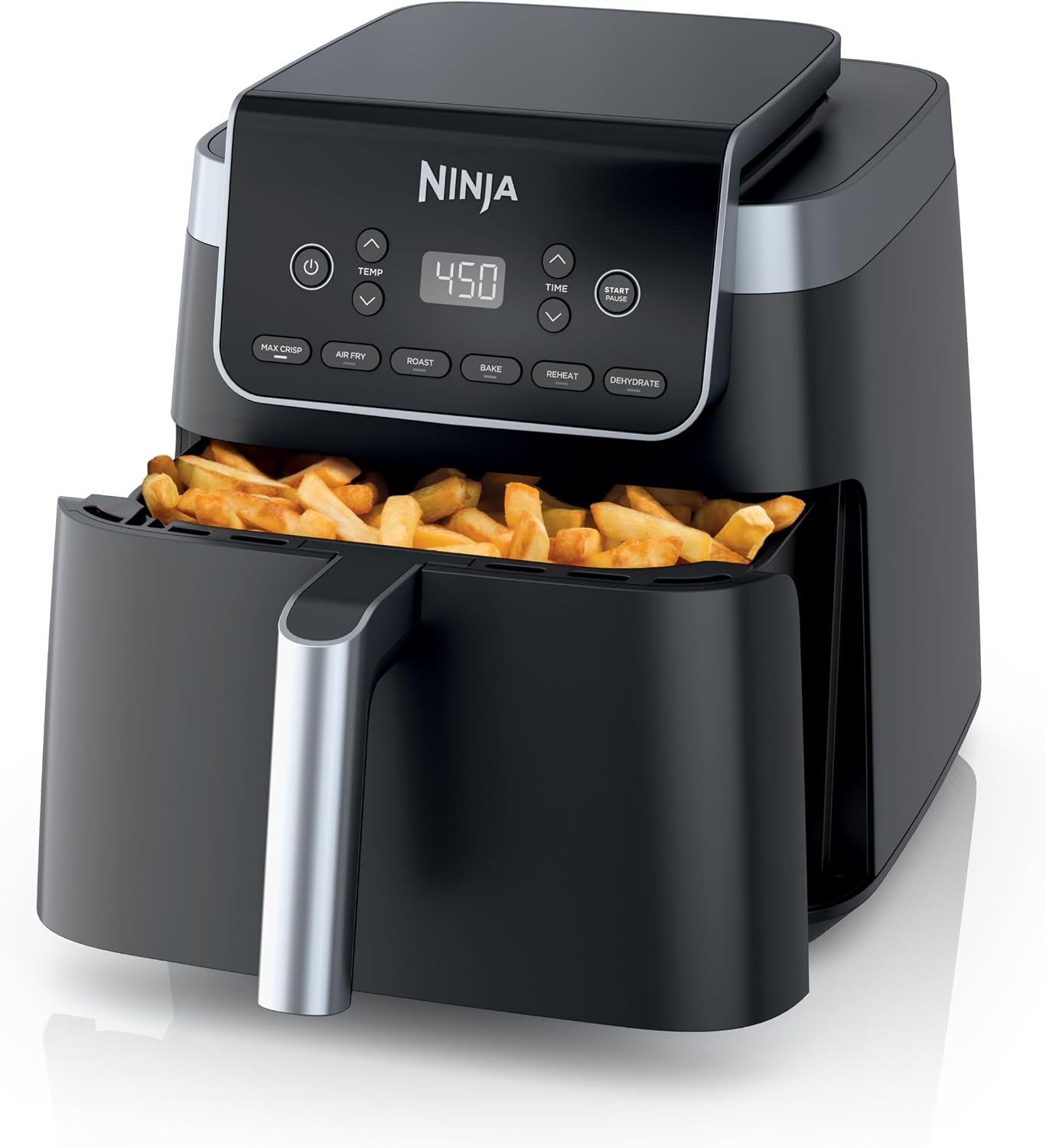
Our pick: Ninja Air Fryer XL with MaxCrisp, 6.5 Qt, 6-in-1, Grey, AF181
 Visit on Amazon →
This is the machine I point people to when they want one unit that does weeknight dinners without babysitting. The 6.5 quart capacity is large enough for a family portion of wings or a full tray of vegetables, and the 6-in-1 layout covers air fry, roast, bake, reheat, dehydrate, and broil, which means it replaces a countertop oven for most of what people actually cook.
MaxCrisp is the part that matters for this guide. It is the airflow and temperature behavior that decides whether your food comes out crisp or pale, and it is why this machine earns a spot in a workflow article rather than just a spec comparison. The basket and crisper plate come out and go straight into the sink, which sounds trivial until you have owned a machine where they do not.
Flaws but not dealbreakers: A 6.5 quart basket is a footprint commitment on the counter. Measure your cabinet clearance before you order, because this is not a machine you will want to lift in and out of a low shelf twice a day.
Anyone cooking for two to four people who wants one appliance to handle fries, chicken, and roasted vegetables without a second pan should start here.
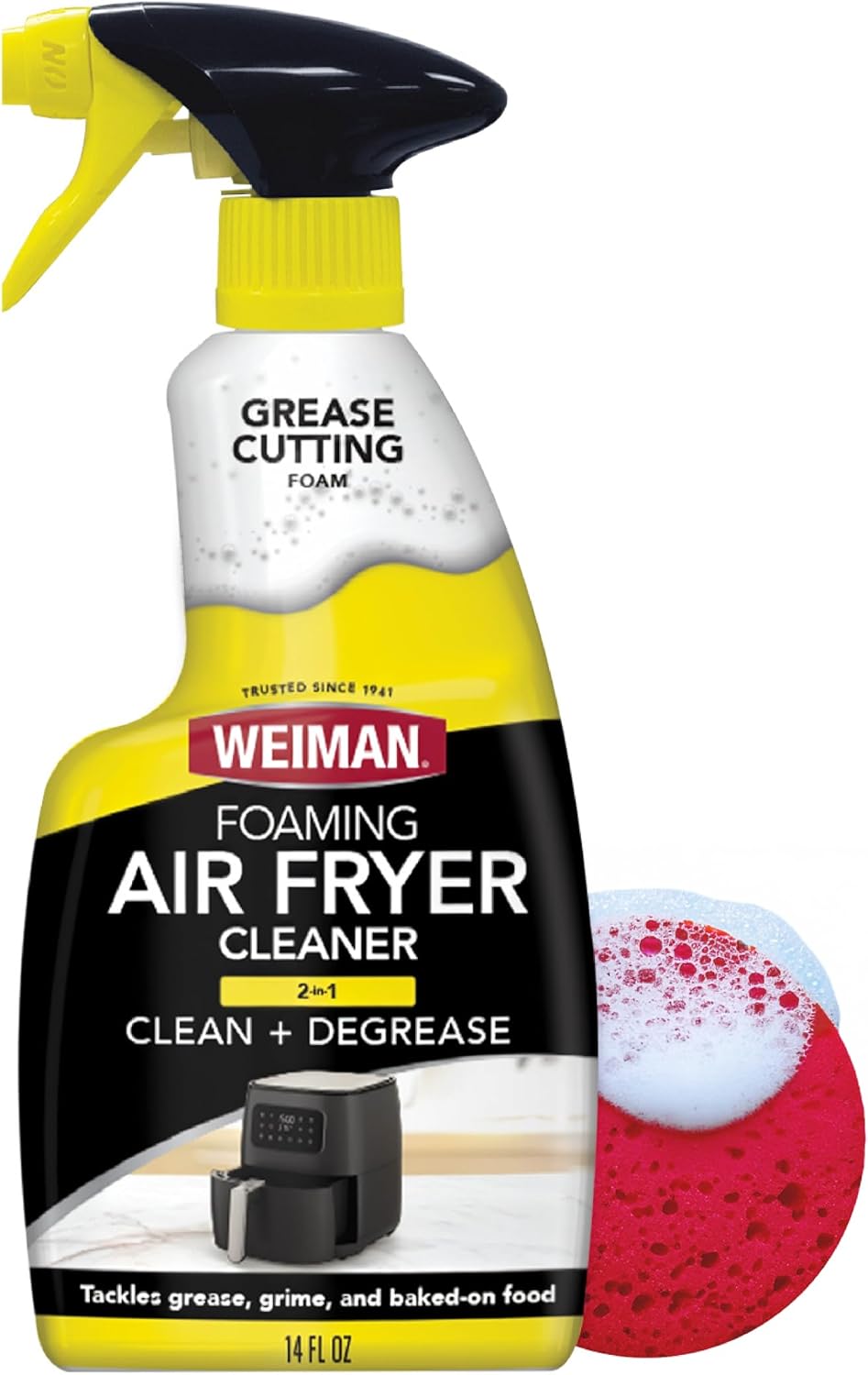
The cleanup pick: Zep Home Pro Air Fryer & Microwave Cleaner, R49306-24 oz, Eliminates Tough Grease, Grime, and Food Residue Without Any Harsh Fumes
 Visit on Amazon →
Air fryer grease is different from stovetop grease. It gets pulled into the fan housing, it bakes onto the heating element, and it builds a film on the basket that a dish sponge alone will not cut. This Zep formula is made specifically for air fryer and microwave interiors, which is the exact problem, and it is designed to break down tough grease, grime, and food residue without the harsh fumes that make you open every window in January.
The reason I care about the fume part is practical. An air fryer sits on a counter in a small kitchen, and a cleaner that requires ventilation is a cleaner you will avoid using, which means the grease keeps baking on until the basket is a lost cause.
Flaws but not dealbreakers: It is a dedicated cleaner, so it lives under the sink rather than doing double duty as an all purpose spray. That is the trade for not putting a harsh degreaser on a nonstick surface.
Anyone whose basket has started to feel tacky or smell like old oil even after washing should keep a bottle of this on hand.
The crispy air fryer workflow
Now the part you came for. This works on any air fryer with a temperature dial you can trust, including the machine above.
Step one: Preheat real talk. A lot of machines claim you do not need to preheat. In practice, most of them cook better after three to five minutes at temperature, especially with frozen food and anything breaded. If your fries come out pale on the outside while the inside is done, this is the first thing to fix.
Step two: Dry the surface. Pat chicken, vegetables, and anything you thawed with a paper towel. A wet surface spends the first several minutes of the cook steaming, and by the time the moisture is gone the food is already overcooked. This one step does more for crispness than any seasoning blend.
Step three: Oil, but lightly. A thin coat is enough. Too much oil pools in the basket, smokes, and fries the bottom of the food while the top stays soft. An oil sprayer beats a drizzle because it gets an even film on irregular shapes.
Step four: Respect the usable footprint. The single biggest mistake I see is filling the basket to the line. Air has to move around every piece. If food is touching or stacked, the surfaces in contact will not crisp, no matter how long you cook them. Cook in two batches. It is faster than adding ten minutes to a crowded basket.
Step five: Think in temperature, not time. Time is an output, not an input. Set the temperature that suits the food, then check early and add minutes as needed. Frozen fries want a high temperature and a shake. A thick chicken thigh wants a moderate temperature so the inside catches up to the outside. If your machine runs hot, drop the set temperature by 25 degrees and you will immediately get more even results.
Step six: Shake or flip once, at the right moment. For small pieces, shake the basket at the halfway mark. For larger pieces, flip once. Shaking every three minutes drops the temperature each time you open the drawer and stretches the cook.
Step seven: Let it rest and let the steam out. Straight out of the basket, food is still throwing off moisture. Give it a minute on a rack, not a plate, so the bottom does not go soggy in its own steam.
Step eight: Clean it while it is warm. More on this below, but the single best habit is wiping the basket while it is still warm and the grease has not set.
How to clean an air fryer without ruining the coating
Nonstick coating fails for two reasons: abrasion and heat cycles. You cannot control the heat cycles, but you can absolutely control the abrasion, and that is where most baskets die.
Let the basket cool until it is warm but handleable. Hot grease smears, cold grease sets. Wipe the bulk of the oil out with a paper towel and throw it away rather than pushing it down the drain.
Wash the basket and crisper plate with warm water, a drop of dish soap, and a soft sponge. No steel wool, no abrasive powder, and no stiff brush, even a silicone one if it has a scrubber edge that feels rough on your fingertips. If the coating scratches with a silicone brush, it was not going to survive your cooking utensils either.
For baked on residue, apply the Zep cleaner according to the label, let it sit, and wipe. Do not soak a coated basket overnight in anything stronger than dish soap, and do not put the basket in the dishwasher unless the manufacturer lists that part as dishwasher safe. Plenty of baskets that claim dishwasher safe warp anyway, and a warped basket does not seal against the drawer, which means hot air escapes and your crispness goes with it.
Clean the heating element area only after the machine is unplugged and fully cool. A wipe with a damp cloth is enough for the housing. Never spray cleaner directly into the machine.
When it still comes out wrong
If fries are pale, the basket was crowded or the surface was wet. If the outside burns before the inside cooks, the temperature is too high; drop it 25 degrees and add time. If everything tastes greasy, you used too much oil and it pooled. If the machine smokes at 400 degrees, you have grease on the element, and that is a cleaning problem, not a cooking problem. If one corner of the basket always burns, that is your hot spot, and rotating the food once during the cook is the workaround.
The machines that did not make this guide
I recommend plenty of air fryers that are not in this article, and they are worth knowing about. Cosori's TurboBlaze is the best all rounder I have measured for temperature accuracy, and its basket is genuinely huge. The Instant Vortex Plus is the value pick, with a clear window and even cooking that punch above its price. Ninja's Dual Zone is the best choice for families who want two proteins at once, though the footprint is enormous. Philips still makes the crispiest results of anything I have tested, and you pay double for the name.
None of them change the workflow above. The steps are the same on a budget machine and a flagship, which is exactly the point.
What this all costs
The cooking technique is free, and it is the part that matters most. The two products here are the only spending decisions in this guide. Check current Amazon price on the Ninja to see where the machine lands today, and check current Amazon price on the Zep cleaner, which is a small bottle that lasts through months of weekly use.
Compare that against the alternative: replacing a basket every year because the coating flaked, or replacing a whole machine because the fan housing filled with baked on grease. The cleaner costs less than the mistake, and the technique costs nothing at all.
Run the eight steps once on a batch of frozen fries and you will feel the difference in the first ten minutes. Dry the surface, leave space between the pieces, trust the temperature over the clock, and wipe the basket while it is warm. That is the whole job, and your air fryer was built to do it.