I have cooked more air fryer meals than I can count, and the machines that stay on my counter are never the ones with the loudest spec sheet. They are the ones that hold temperature, fit real food in the basket, and do not make me scrub a coating off with a sponge. This air fryer comparison covers four items that landed in my kitchen at the same time, and they are not all air fryers. There are two basket fryers, one countertop steam and convection oven, and one small set of toddler forks that came along because my kid's utensils keep disappearing into the dishwasher void. I am including all four, because that is the honest picture of what people actually buy together.
Related: Basket Size Vs Usable Footprint: What Air Fryer Liters Actually Mean
The short answer: for a two or three person kitchen, the Cuisinart 4.5-quart basket fryer is the one I would buy. If you feed four or more, the Gourmia 6-quart is the better use of counter space. The renewed Cuisinart steam and convection oven does a different job entirely, and the forks are for the kids, not for the fries.
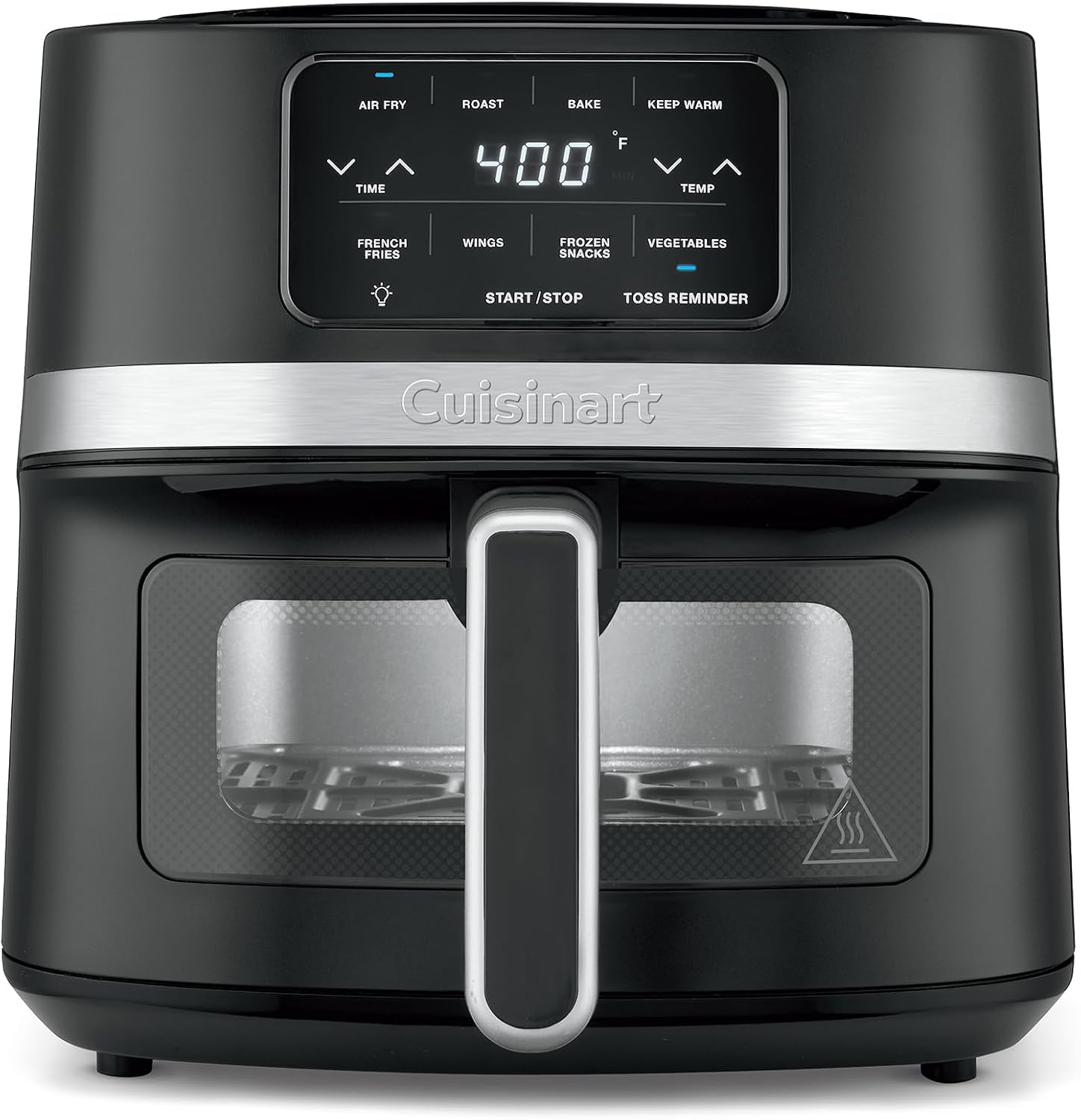
Cuisinart Air Fryer, 4.5-Quart Basket Fryer
Four cooking functions in one compact body, and dishwasher-safe parts instead of a hand-wash-only basket
The 4.5-quart basket is a two-person basket once you account for the walls
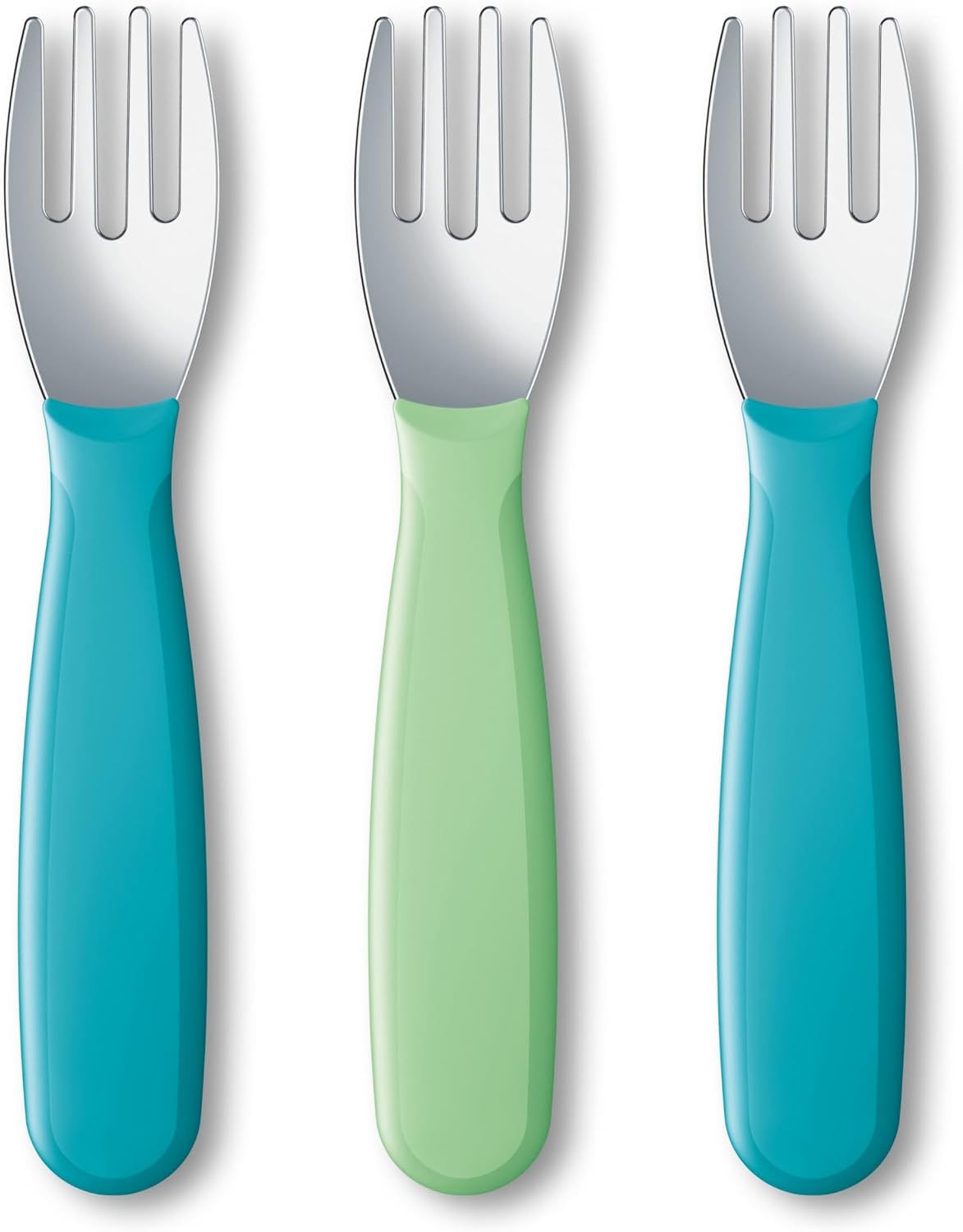
NUK Kiddy Cutlery Forks, Stainless Steel, Pack of 3
Stainless steel, BPA and latex free, with short tines sized for small hands
Not an air fryer, and a three-pack will not fill a whole drawer
Cuisinart Steam & Convection Oven, 20x15 (Renewed)
Steam plus convection is a genuinely useful combination for bread, leftovers, and fish
Renewed stock varies unit to unit, and it claims more counter than any basket fryer
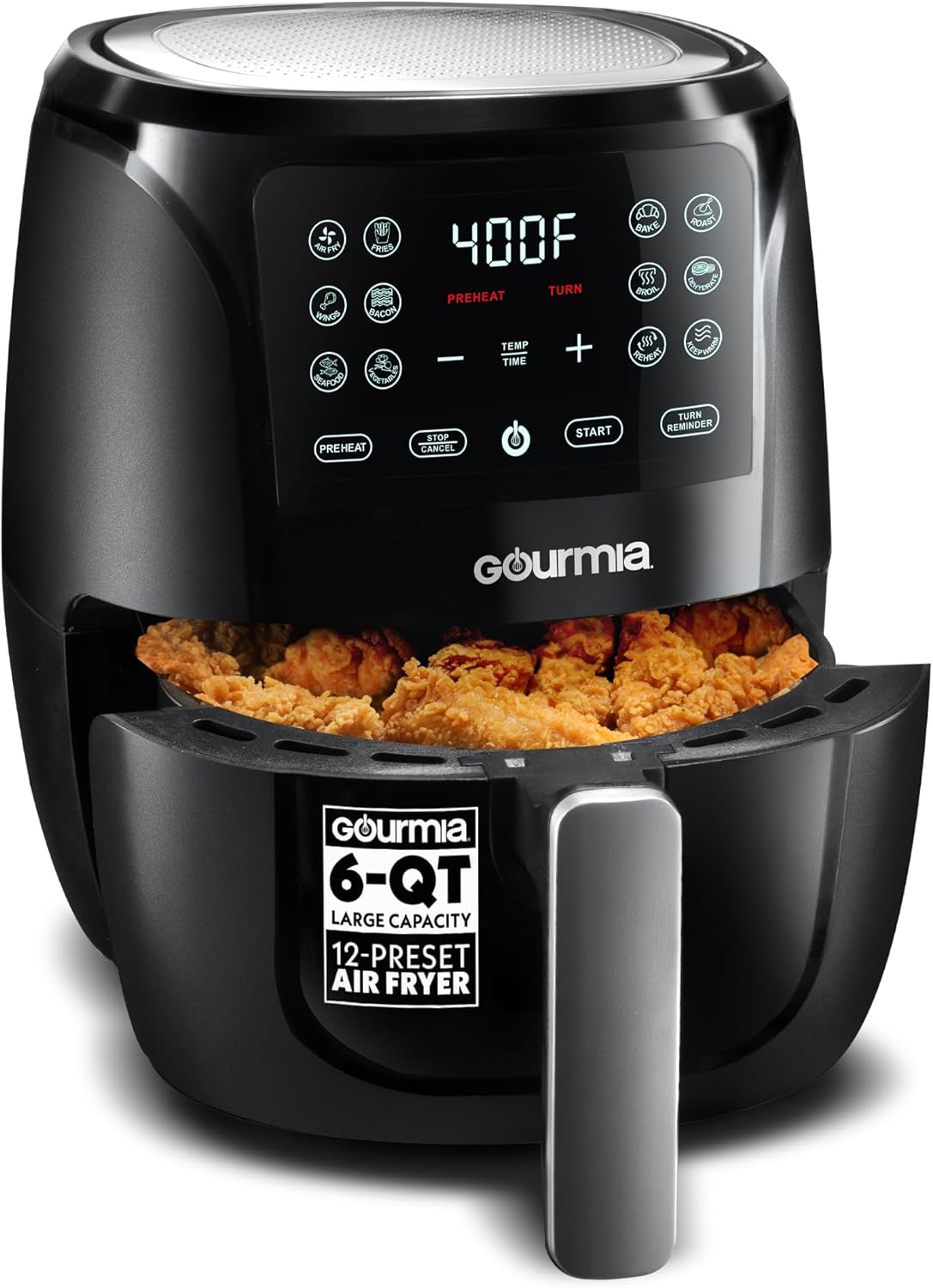
Gourmia Air Fryer, 6 Qt
The largest basket in this group, with 12 presets as a starting point rather than a rulebook
One basket means one protein at a time, and the black shell shows every fingerprint
Prices and availability were captured from Amazon Creators API and may change.
How I test before anything gets a recommendation
Every machine that reaches my counter runs the same four-part protocol. First, a frozen fry test, straight from the bag, no oil, no shaking for the first ten minutes so I can see where the hot spot forms. Second, a chicken thigh crisp test, skin on, because skin tells you more about airflow than any wattage number on the box. Third, a cake test, which is the fastest way to find uneven heat: a machine that runs hot in one corner gives you a lopsided cake every time. Fourth, a 30-day daily-use trial, which is where coatings fail and dishwasher claims get audited.
I also measure the basket floor with a ruler, wall to wall, and log cook times for the same 40 staple foods in a spreadsheet. A 6-quart box with a 4-quart floor is a 4-quart machine, and I would rather you know that before you buy than after.
The Cuisinart 4.5-quart basket fryer: the one I would buy first
This is the machine in this group that fits a normal kitchen. It air fries, roasts, bakes, and keeps warm, which sounds like marketing until you realize how often you use roast and bake in the same week. A basket fryer that can hold a small casserole dish at 350 is a different appliance than one that only knows how to blast frozen food.
The parts are dishwasher safe, and that matters more than any preset. I have hand-washed enough baskets to know that a coating survives exactly as long as you are willing to baby it. A basket that goes in the dishwasher gets used on a Tuesday night, and a basket that does not gets used when you have the energy.
The four presets are fine. They are a starting point, not a recipe. My advice is the same as always: learn your machine's real temperature and stop trusting the button. If you want the compact option, Visit on Amazon →.
The Gourmia 6-quart: capacity without the counter footprint of a dual-zone
Six quarts is the size where air frying stops being a side dish and starts being dinner. The basket here is the largest in this comparison, and the 12 presets cover the usual suspects, from fries to shrimp. The black shell is a fingerprint magnet, so keep a microfiber cloth nearby.
The trade-off is the same one every single-basket machine has: one basket, one temperature, one protein. You can cook chicken and vegetables together, but the vegetables will be done before the chicken and you will be fishing them out with tongs while the chicken finishes. If your family eats two different proteins at once, no single-basket fryer solves that, no matter how many presets it ships with.
Where it wins is volume. A 6-quart basket holds enough wings for a real crowd, and the usable footprint is honest for the size. For a household of four, this is the machine that earns its counter space. Visit on Amazon →.
The renewed Cuisinart steam and convection oven: steam is the underrated feature
This is not an air fryer and I am not going to pretend it is. It is a countertop steam and convection oven with a 20x15 footprint, and steam is the part people skip over when they compare specs. Steam is what makes a loaf of bread come out with a real crust and a soft crumb, and it is what rescues leftovers that would otherwise dry out into jerky in a convection oven. If you bake, this is a different category of useful.
The honest caveat is the word renewed. Renewed stock varies from unit to unit, so inspect yours the day it arrives and confirm the return window before you commit. Steam also means water, which means a tank to fill and a descale routine you will not enjoy. That is the cost of the feature.
It also takes up more counter than any basket fryer here, so it is a buy for someone who already knows they want oven capacity. Visit on Amazon →.
The forks: the only item here that is not an appliance
I am not going to review a fork on airflow, because that would be silly. The NUK Kiddy Cutlery Forks are stainless steel, BPA and latex free, and sized for kids 18 months and up, with short tines that are less likely to become a hazard when a toddler decides to stab the table instead of the food. They come in a pack of three, which is roughly two days of a toddler's dish cycle.
Why include them in a kitchen appliance comparison? Because this is what actually happens when people shop. You buy an air fryer, you start cooking more food at home, and suddenly you need kid-sized utensils that survive the dishwasher alongside the basket. They are a small, cheap addition, not a substitute for anything else in this article. Visit on Amazon →.
What actually matters when you compare air fryers
Usable footprint over box liters. Manufacturers measure the outside of the basket. I measure the inside. The gap between the two is where disappointment lives, and it is the single most common reason people tell me their new fryer "seems small."
Temperature accuracy over wattage. A machine that runs hot ruins every recipe you trust it with, because you keep adjusting for a problem that should not exist. Airflow design does more for crispness than a higher wattage number ever will. This is why two machines with identical wattage can produce wildly different fries.
Dishwasher-safe parts over nonstick claims. Every basket says nonstick. The question is whether the coating survives a month of real cooking, a silicone brush, and a dishwasher cycle. If a brand tells you to hand wash to protect the finish, believe them and price that labor into your decision.
Presets as a suggestion, not a system. Twelve presets sounds like twelve recipes. In practice, they are twelve starting temperatures that you will override within a week. Buy for the hardware, not the button count.
Exterior material and cleaning. Stainless steel wipes clean. Black plastic shows oil mist and fingerprints. This has nothing to do with cooking performance and everything to do with whether you still like the machine in month six.
The trade-offs you cannot escape
Small basket, small counter footprint, more batches. Large basket, more counter space, fewer batches. There is no machine that is both genuinely compact and genuinely roomy, and anyone selling you one is measuring the box.
Single basket means one temperature. Dual baskets mean two, and roughly double the footprint and the washing up. I own two large machines and I still tell people to buy small first, then add capacity when they know what they cook.
Renewed means real savings and real variability. If you are comfortable inspecting a unit and using a return window, renewed is a smart way to get steam and convection for less. If you want zero hassle, buy new.
And a basket fryer is not an oven and an oven is not a basket fryer. The Cuisinart 4.5-quart and the Gourmia are fast, crisp, and great for small portions. The steam oven is slower, bigger, and better at anything involving dough, steam, or a casserole dish.
Basket fryer or countertop oven first?
If you mostly cook frozen food, chicken, vegetables, and leftovers for one to three people, buy a basket fryer. It preheats fast, it is easy to clean, and it will replace your oven for weeknight dinners more often than you expect.
If you bake bread, reheat rice and fish, or cook for a crowd, the steam and convection oven is the more versatile second purchase. Most people I know end up with both, and the basket fryer still gets used more on weeknights.
What I am testing next
I am partway through a 2026 large-capacity round, five units, 40 staple foods each, with a temperature log for every single cook. The pattern I keep seeing is that the machines with the best airflow beat the machines with the biggest wattage numbers, and the ones that hold temperature within a tight band are the ones I stop thinking about while I cook. That is the highest compliment a kitchen appliance can get. I will publish the full log when the last unit finishes its 30-day trial.
Until then, the advice in this comparison stands: pick the basket size that matches how many people you actually feed, check that the parts go in the dishwasher, and learn your machine's real temperature instead of trusting the presets.